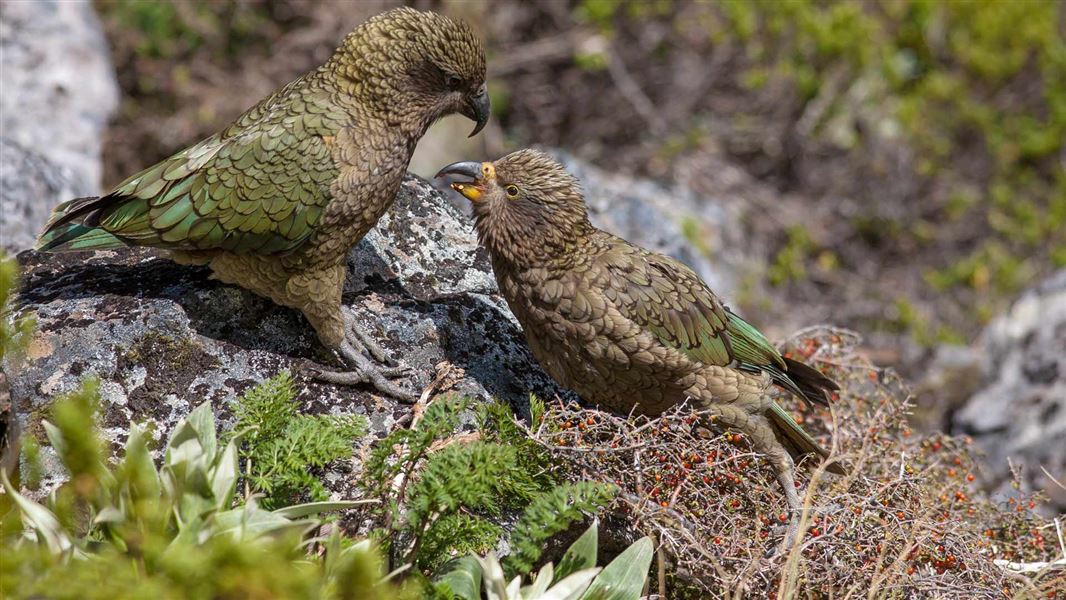
Population: 1,000–5,000 estimated
New Zealand status: Endemic
Conservation status: Threatened–Nationally Endangered
Habitats: From the mountains to the sea
Threats: Predation, human impacts including lead poisoning, deliberate killing, being fed by people, and accidents with man-made items such as cars
Species information: Kea on NZ Birds Online
Image gallery
Care for kea
Never feed kea - feeding kea is harmful to them.
Take the kea pledge and get free stickers for your drink bottle, car or bag, to let others know you're committed to kea conservation.
Call 0800 DOC HOT (0800 362 468) if you see kea or other wildlife unwell or being harmed.
Why kea are special
Kea do an important job in our ecosystem, they spread seeds around, making more native plants grow.
Kea are very curious and love to explore. They often play, investigate things, and figure out how things work.
There have been some amazing real-life stories of kea:
- turning on water taps and using tools to get food.
- moving road cones and playing tug-of-war with other animals.
- setting off traps to steal bait.
- locking someone in a toilet.
- gaining entry to a gym and having fun with ping pong racquets.
When kea sing or call, it can sound like they are saying their own name, “kee-aaa, kee-aaa.”
Listen to a kea song (MP3, 977K)
Where kea live
Kea live in alpine (mountain) areas and forests and some also live near sea level across the South Island, from Golden Bay to Fiordland.
Some kea live in zoos and wildlife centres to help with education, research, and as a backup population. There are about 50 kea in captivity in New Zealand. Although they are in captivity they are still treated as wild.
Kea are an important taonga (treasure) species for Ngāi Tahu and other iwi and are loved by many New Zealanders and people throughout the world.
Kea were even voted Bird of the Year in 2017.
A few places you can see kea
- Kepler Track - alpine section and Iris Burn area.
- Routeburn Track and Key Summit Track.
- Avalanche Peak Track in Arthur's Pass, and around the village or Death's Corner carpark.
- Aoraki Mount Cook – Sealy Tarns Track and Red Tarns Track.
- Milford Track.
- Homer Tunnel area (on the way to Milford).
Kea are in danger
These introduced predators kill kea:
- Stoats (main predator) – they kill adult kea, chicks and eggs.
- Feral cats – they kill adult kea, chicks and eggs.
- Possums – damage nests.
- Rats – eat eggs.
Kea are especially at risk because they nest on the ground and spend lots of time there looking for food.
Kea monitoring shows when predators are controlled, about 70% of kea nests succeed. Without control, this can drop to 10% or less.
Human impacts on kea
- Feeding by people – human food harms kea and also teaches them to approach human structures to investigate for food, which gets them into trouble when they mess up bins or eat roofs with poisonous lead in them.
- Cars – kea are often hit by cars on roads where people have taught them there may be food available.
- Lead poisoning from buildings and ammunition (in animal carcasses).
- Illegal shooting – some people think kea are pests because their investigations make them a nuisance – but we have taught them these bad habits.
The playful behaviour of kea can also lead to damage to cars and buildings.
Protect kea
- Never feed kea - feeding kea is harmful to them.
- Put away loose clothing, food, and gear, especially brightly coloured objects.
- Replace lead materials on buildings.
- Use non-lead ammunition when hunting in kea habitat.
- Report kea sightings or;
- Use the kea survey tool app. See How to use the kea survey tool app
- If you are a regular backcountry user, record the presence/absence of kea on your trips.
What to do if kea are causing issues
To reduce the likelihood of conflicts with kea, make sure they have no access to food, rubbish or lead, and make things as ‘boring’ as possible for them.
Advice on sharing spaces with kea (PDF, 2,200K)
If you need support with managing kea on your property, contact your local DOC office or Kea Conservation Trust for advice.
How people are helping protect kea
Finding ways to help precious kea survive and thrive in New Zealand is important.
Kea recovery – a strategy to help kea survive
Te Rautaki Whakaora Kea / Kea Recovery Strategy (2024-2034) explains the key actions needed to help kea survive and increase in number.
This 10-year strategy was put together by DOC, Te Runanga o Ngai Tahu and the Kea Conservation Trust.
It aims to protect kea across their whole natural home — from the mountains to the sea (ki uta ki tai). The strategy also guides DOC, partners, and community groups who are working together to care for and protect kea.
Te Rautaki Whakaora Kea/the Kea Recovery Strategy (PDF, 10, 653K)
Kea recovery group five-year action plan (PDF, 603K)
Kea research
Scientists study kea to understand how to protect them. They have worked out:
- Predator control helps more chicks survive.
- Adult kea are often hunted by cats and stoats.
- New tools are needed to control feral cats.
Kea: a review of ecology, threats, and research gaps for conservation (PDF, 4,830K)
Ground-based pest control in kea habitat
Making pest control safer
Researchers are testing ways to protect kea while still controlling pests by:
- Adding bird repellents to bait.
- Designing ways to keep kea out of predator traps.
- There are approved and safe kea traps available: Kea safe field trials guidance (PDF, 799K).
Lead Removal
Kea Conservation Trust has a lead replacement scheme which funds lead removal
on private land and use of non-lead shot by recreational hunters.
Our Changing World: Lead bullets – a health risk to humans and kea | RNZ NewsLead
Support the Kea Conservation Trust
The Kea Conservation Trust works with others to research and raise awareness of kea and the issues impacting them.
- Get involved with the Kea Conservation Trust
- Find publications in the kea bibliography